
Stay up to date with news releases and notices from the Manitoba Financial Services Agency (MFSA).
Amanda

- Age: 20s
- Marital Status: Single
- Number of Children: 0
- Career: Administrative Secretary
- Education: Some college or university
- Income: $20,000 – $40,000
Growing up, my parents helped me learn the true value of money.
In the earlier stages of their relationship my parents either lived in Manitoba housing or small rentals. I never knew how much money they made, but from our lifestyle I knew it was considerably less than my friends’ parents. They were very strict with money and never approved of me going to a movie or to the mall just to shop for fun. This left me at home many nights sad and bitter that I didn’t have the same lifestyle as my friends. On the other hand, a very positive memory I have is when my parents purchased their first home – they were literally crying they were so happy!
After high school I tried university, but was drawn to the idea of a full-time job and saving for my first apartment. I now live on my own, completely independent, and do everything I can to save for a down payment on a home. I put $200 each cheque into a tax free high-interest savings account and $100 for my night university courses. I take the bus, only buy clothing if its on sale, use coupons, and buy no-name groceries
I’m now focussed on saving and planning for my future rather than instant gratification.
Laurie

- Age: 50s
- Marital Status: Divorced
- Number of Children: 4 children, 3 grandchildren
- Career: Schools Programmer/candidate for Ordained Ministry
- Education: currently working on Master’s Degree
- Income:$40,000 – $60,000
Before marrying, I saved up and bought my first house, one of the best financial decisions I ever made. After a few years I married, had four beautiful kids, and then sadly, illness struck our family. My husband had a brain aneurism and had to be removed from our home for our safety. Due to bad memories and financial duress, I put my house up for sale, but the profit was only just enough to pay off our debt.
I was a penniless mother with four children, so I did what I could to maintain a semi-normal life, despite enormous hardship.
I rented a garden for $15 each summer to grow food. We only had heat and hot water in the winter when it was illegal for the gas company to turn it off. I took the kids to public pools so they could bathe. We found grants and bursaries to pay for my son’s education. He and I combined our funds and eventually, with the help of a co-signer, made a down payment on a new house.
Looking back, even when I had little to no money, I budgeted. It was a record to see where money was going and how I could change spending to better utilize it.
After everything I’ve been through, I’ve found that talking openly has helped me learn more about money. You need money in this world, so conversation and education is key to keeping more of your money and being able to enjoy life without worrying about it.
I’ve seen both sides of money – from stability to instability and back again.
Leslie
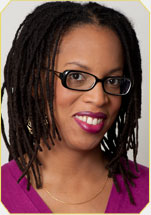
- Age: 30s
- Marital Status: Married
- Number of Children: Baby due in May
- Career: Counsellor
- Education: Completed undergraduate degree (graduate degree in progress)
- Income: $20,000 – $40,000
One day, after a disappointing job interview, I spent the rest of the day shopping – all on credit. I realized that I was using spending to make myself feel better in the moment, but I ended up feeling awful because I could never clear my debt or save any money. I never accumulated a lot of debt, but I had no savings. I knew I had to change my habits.
If I were to give a message to other women about money management, it would be to not get caught up in the idea that women have to have hundreds of pairs of shoes and purses and spend tons of money on “fun.” You’ll feel much more confident and attractive if you don’t have financial problems. Think hard before buying small items like cosmetics and accessories. They’re usually impulse buys, and they add up.
I used to be a real ‘shopaholic’ in my 20s and early 30s.
Luisa

- Age: 30s
- Marital Status: Married
- Number of Children: 3
- Career: Marketing and Advertising
- Education: Some college or university
- Income: $20,000 – $40,000
Growing up, my parents helped me learn the true value of money.
Illness had a huge effect on my personal finances. At the end of my first year of university I was diagnosed with an illness that kept me in and out of treatment and hospitals for five years. I was still living at home and had taken a student loan to cover my tuition and supplies, but being sick meant that I was unable to work without having many interruptions.
In 1999, I had to take a year off of school so I applied for my student loan to go on interest relief status. When I was ready to go back to school, I found out the rep at my financial institution had failed to process my relief status application. My loan status had gone to collections. Thankfully I had kept record of absolutely everything, so Manitoba student loans granted me a new loan to complete my education. I transferred to a new bank where a financial adviser gave me a loan to pay off the debt in collections.
By this time I was feeling better, working full-time, attending school and still living at home. I had also saved money, working a bit during my year off school. Looking back, I think the hassle could have been avoided if we had been more informed and we didn’t have as much of a language barrier. My greatest advantage was my parent’s support and the decision I made to live at home.
I got through it with the support of my family and great advice from my new bank.
Vanessa

- Age: 20s
- Marital Status: Single
- Number of Children: 0
- Career: Financial Security Adviser/Freelance designer
- Education: Completed technical college
- Income: $20,000 – $40,000
In my early childhood, money was never an issue…but when I was 11 years old, my father passed away from cancer and my sister and I suddenly had to help out because our family income had been sliced by 80%. Shortly after my father had passed away I have a distinct memory of my mother asleep on her desk, surrounded by bills. We were being sued for the mortgage on our house due to an underwriting problem with my dad’s life insurance.
We ended up winning the court battle, though the life insurance policy wasn’t enough to cover our expenses. My mother took up two more jobs and used her widow’s pension to buy a prime life insurance policy on herself. She also took out two small insurance policies on myself and my sister despite the disagreement this caused among our family as if it were “a jinx” on our lives. Bless her soul for taking out the insurance on me, because I’ll never be able to get any more.
Five years later my mother remarried and thanks to some smart investments we were much better off. But that year I was diagnosed with cancer, completely unrelated to my father’s. I was unable to function on my own let alone work, so relied solely on my orphan pension. My mother cut back on her work significantly in order to take care of me, but thankfully we had her new husband’s income to help ease the shortfall of her cutback.
When I was 18, I was finally in remission and anxious to move out. Working was a challenge – my energy was very low due to many after effects from my chemotherapy and I had very high medical and dental bills and a depleting number in my bank account. Under the guidance of my financial adviser I knew I needed to find a job with benefits to cover at least part of these bills. I took this advice, and now work full-time and also part-time on a few side-projects in the arts community.
Due to my medical history and the fact that I can’t get any more insurance, I have to be smart about my investments and planning for retirement. I’ve set goals to have my student loans and personal loans paid off before I’m 30. I have a TFSA that helps me achieve this, and I never miss a payment.
It’s now my mission to make smart investments the way my mother did in order to protect the family I might have one day.